
TL;DR: Most registrars only offer HTTP forwarding — no HTTPS. Domain-Forward.com provides free domain forwarding with automatic HTTPS, 301 redirects, and analytics for up to 5 domains. Works with any registrar. Setup takes 5 minutes.
You have an old domain that needs to forward to a new address. You don’t want to pay for it, and you don’t want to set up a web server. Here’s how to do it for free with HTTPS — regardless of your registrar (GoDaddy, Namecheap, Hostinger, etc).
When You Need Domain Forwarding
These are the most common scenarios:
- Rebranding — you moved from
oldcompany.comtonewcompany.comand need the old domain to redirect - Domain consolidation — you own multiple domains (
.com,.net,.io) and want them all pointing to one site - Shortening a URL — you bought a short domain like
myco.ioto redirect to your longer primary domain - Platform hosting — you have a Shopify, Wix, or Squarespace site and want a cleaner domain pointing to it
- Parking unused domains — you own domains you’re not actively using but don’t want visitors hitting a dead page
In all of these cases, you need an HTTP redirect — not just a DNS record. DNS alone can’t redirect traffic (it only maps domain names to IP addresses). You need a server that responds with a 301 redirect, and that server needs an SSL certificate to handle HTTPS visitors.
For a full technical breakdown, see our guide on DNS and domain redirects.
Why Registrar Forwarding Fails
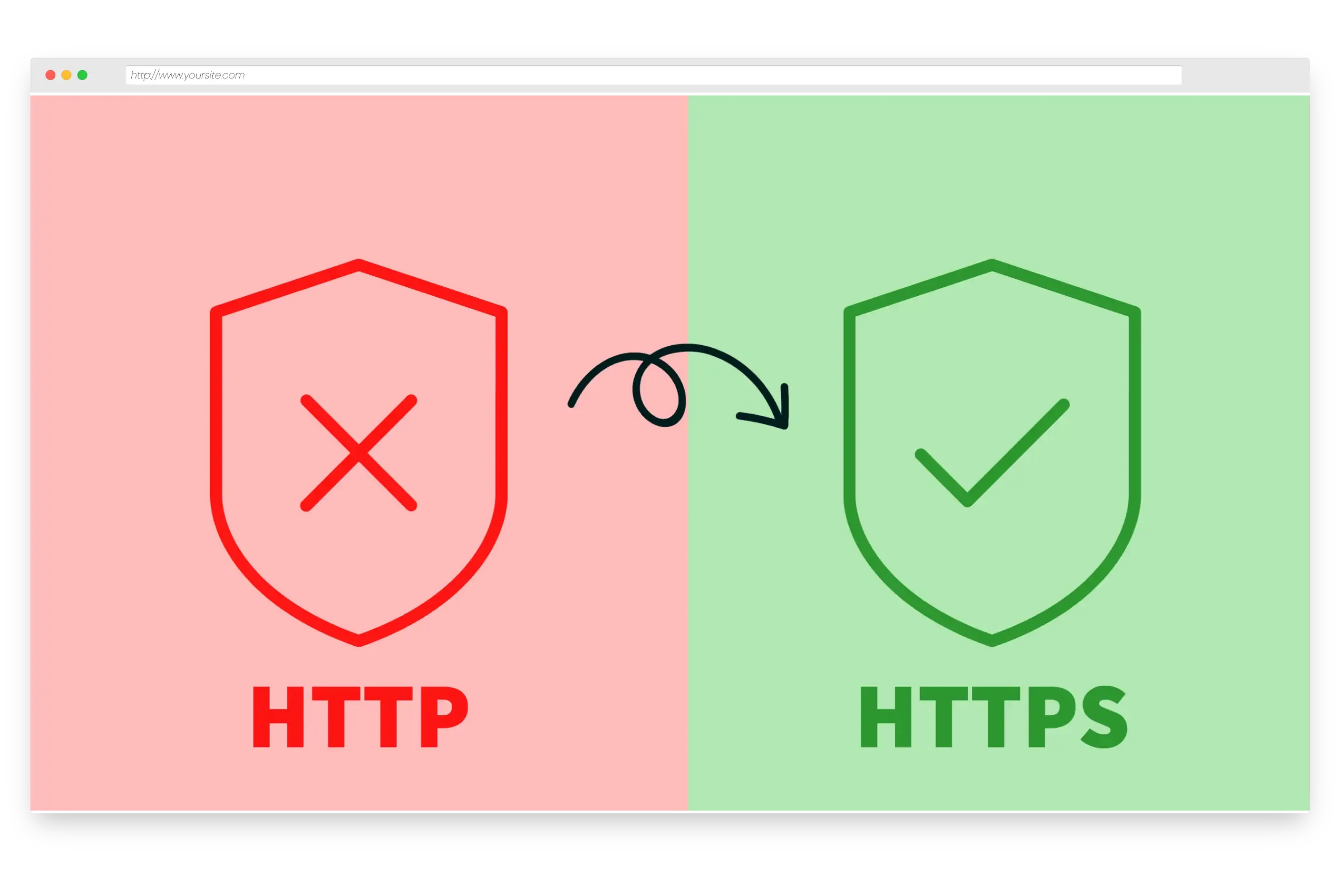
Registrars like GoDaddy, Namecheap, and Hostinger offer free domain forwarding. The catch: most don’t support HTTPS.
Here’s what happens:
- You set up forwarding at your registrar for
old-domain.com→new-domain.com - A visitor types
old-domain.comin their browser - The browser automatically tries
https://old-domain.com(this is default behavior in modern browsers) - The registrar’s forwarding server has no SSL certificate for your domain
- The connection fails — the visitor sees
ERR_CONNECTION_REFUSEDor a security warning - They leave. Your redirect never fires.
The redirect technically “works” over HTTP, but browsers don’t use HTTP anymore. Your visitors never reach the redirect.
See our registrar redirect comparison for details on each provider’s limitations.
Free Forwarding Options Compared
| Feature | Registrar Forwarding | Cloudflare Page Rules | Self-Hosted (Nginx/Apache) | Domain Forward (Free) |
|---|---|---|---|---|
| HTTPS support | No (most registrars) | Yes | Yes (manual cert setup) | Yes (automatic) |
| 301 redirects | Varies (some use 302) | Yes | Yes | Yes |
| Path forwarding | Varies | Yes (manual rules) | Yes (manual config) | Yes |
| www + non-www | Varies | Manual rules | Manual config | Automatic |
| Setup time | 2 minutes | 10-15 minutes | 30+ minutes | 5 minutes |
| Technical skill | None | Intermediate | Advanced | None |
| Cost | Free | Free (limited rules) | Server costs | Free (up to 5 domains) |
| Analytics | No | Basic | Manual setup | Yes |
For most people forwarding a handful of domains, Domain Forward’s free tier is the simplest option that actually works over HTTPS.
How to Set Up Free Domain Forwarding With Domain Forward
Step 1: Create an account
Sign up at Domain-Forward.com. The free plan supports up to 5 source domains, 200,000 monthly requests, and 2 team members.
Step 2: Add your redirect
Enter your source domain (the domain you’re forwarding from) and the destination URL (where visitors should end up). Choose between:
- 301 (Permanent) — tells search engines to transfer SEO value to the new URL. Use this for rebranding and domain consolidation.
- 302 (Temporary) — keeps SEO value on the original URL. Use this for short-term redirects.
You can also enable path forwarding so that old-domain.com/blog/post redirects to new-domain.com/blog/post instead of just the root domain.
Step 3: Update DNS records at your registrar
Domain Forward shows you the exact DNS records to add. You’ll typically need to set:
- An A record pointing your domain to Domain Forward’s IP address
- A CNAME record for the
wwwsubdomain
Log into your registrar (GoDaddy, Namecheap, Hostinger, etc.), find the DNS management section, and add these records. If you’re unsure how, see our registrar-specific guides:
Step 4: Wait for DNS propagation
After updating DNS records, the changes need to propagate across the internet. This typically takes:
- 5-30 minutes for most cases
- Up to 24 hours in rare cases (depends on your previous TTL settings)
During propagation, the redirect may work intermittently. This is normal — some DNS servers have cached the old records.
How to check progress: Use our redirect tester tool to verify the redirect is working. If it shows the correct 301 response, propagation has reached our test server.
Step 5: Verify it works
Once DNS propagation completes, Domain Forward automatically provisions SSL certificates for your domain. Test both versions:
https://your-old-domain.com— should redirect with a valid SSL certificatehttps://www.your-old-domain.com— should also redirect (both www and non-www are handled automatically)
If you enabled path forwarding, test a subpath too: https://your-old-domain.com/some-page
Will This Break My Email?
No. Domain forwarding only changes A records and CNAME records, which control web traffic. Your email is controlled by MX records, which remain untouched.
If your domain currently receives email (e.g., you@old-domain.com), it will continue working exactly as before. The DNS change only affects what happens when someone visits your domain in a browser.
This is one of the most common concerns we hear from customers, and the answer is always the same: your email stays working.
What the Free Plan Includes
Domain Forward’s free tier provides:
- 5 source domains — enough for personal use or a small business with a few old domains
- 200,000 monthly requests — handles moderate traffic without issues
- Automatic HTTPS — SSL certificates provisioned and renewed automatically
- 301 and 302 redirects — your choice per domain
- Path and query forwarding — preserve the full URL structure
- Basic analytics — see how many visitors are being redirected
- API access — automate redirect management if needed
- 2 team members — collaborate with a colleague
When to upgrade
If you need more than 5 domains, detailed analytics with export, URL masking, or handle more than 200,000 monthly requests, the Premium plan at $15/month covers 30 domains and 10 million requests. For wildcard subdomain redirects or dynamic destinations, see the Ultimate plan.
Get Started
Set up your first redirect in 5 minutes at Domain-Forward.com. Follow the getting started guide for screenshots of each step, or contact us if you run into any issues.
You can verify your redirect is working with our redirect tester tool.