Domain Forward vs Vercel Redirects
Vercel's redirect system is built into their hosting platform — powerful for sites deployed on Vercel, but not standalone. Domain Forward is a dedicated forwarding service that works with any DNS provider.
Feature-by-Feature Comparison
Vercel redirects are a hosting feature. Domain Forward is a dedicated forwarding service.
| Feature | Domain Forward | Vercel Redirects |
|---|---|---|
| Dedicated redirect management UI | ||
| Redirect analytics | Via Vercel Analytics (paid add-on) | |
| REST API | Deploy API (indirect) | |
| Automatic HTTPS | Yes (on Vercel-hosted sites) | |
| Path forwarding | ||
| Wildcard matching | Ultimate plan ($99/mo) | All plans (:path*) |
| Regex matching | Enterprise only | |
| Middleware (code-based redirects) | All plans (Edge Runtime) | |
| Requires Vercel hosting | ||
| Works with any DNS provider | ||
| Free plan | 5 hostnames | Included with Vercel Hobby |
| Setup method | Dashboard / API | vercel.json or next.config.js |
| Redirect types | 301, 302 | 301, 302, 303, 307, 308 |
| Redirect limit | Based on hostname count | 1,024 redirects in vercel.json |
| Has/missing header conditions | ||
| Domain forwarding (entire domain) | Purpose-built | Possible but requires Vercel project |
Where Vercel Wins
Vercel's redirect configuration in vercel.json is clean and developer-friendly. You get wildcards on all plans, has/missing header conditions for conditional redirects, and Middleware for complex logic running at the edge. If your site is already on Vercel (especially Next.js projects), redirects are a natural part of your deployment — version-controlled, deployed atomically, and covered by Vercel's global edge network. Regex support is available on Enterprise plans.
Where Domain Forward Wins
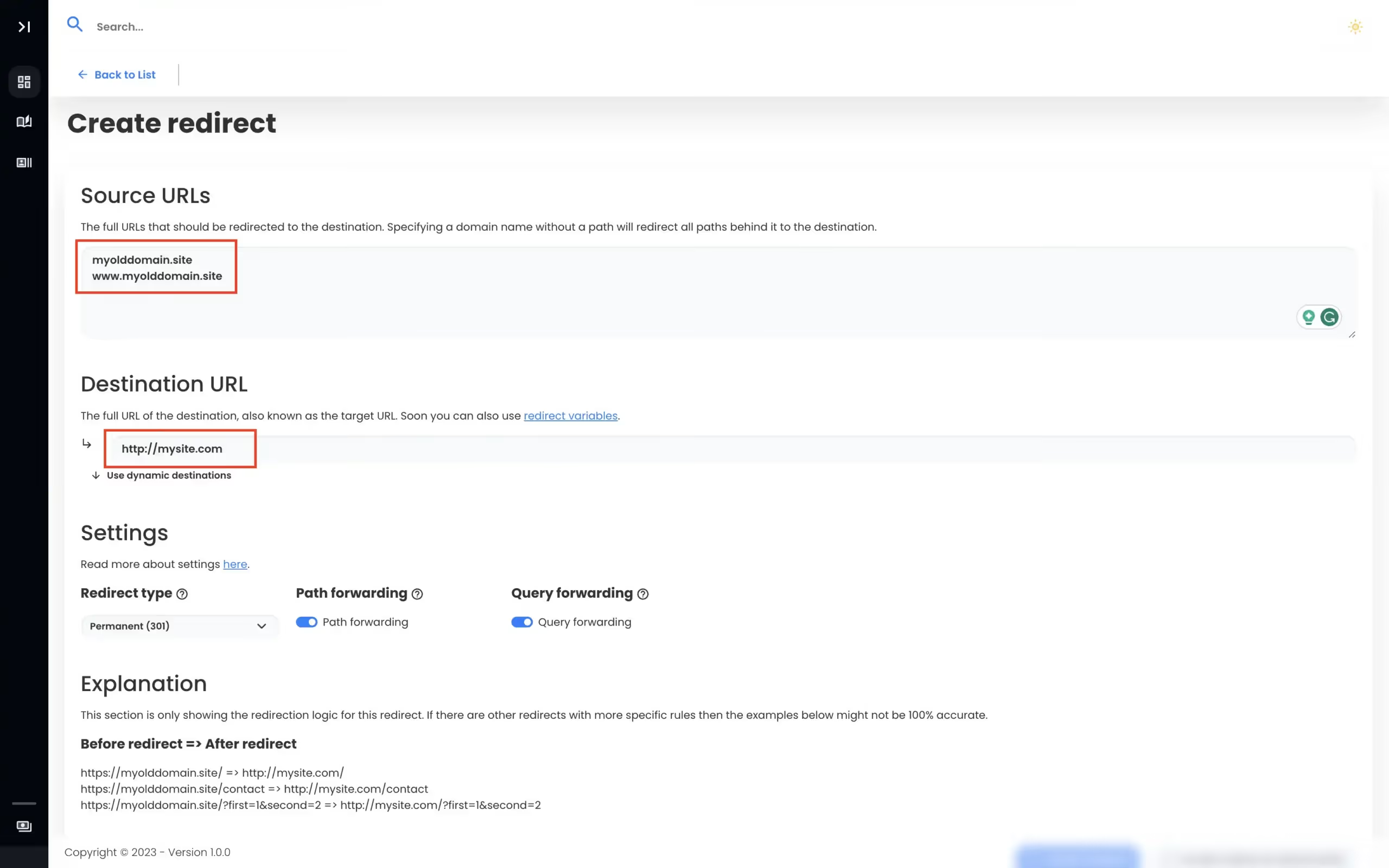
Domain Forward doesn't require a Vercel project or deployment pipeline. You don't need to write JSON config or understand Vercel's platform. Just point DNS, set a destination, done. Domain Forward also provides dedicated redirect analytics per domain — something Vercel only offers as a paid analytics add-on. For teams managing domain forwarding (old brands, vanity URLs, parked domains) without a Vercel hosting relationship, Domain Forward eliminates platform lock-in.
Different Tools for Different Jobs
Like Netlify, Vercel redirects are part of a hosting platform. They're ideal for URL-level routing within a Vercel-hosted site. Domain Forward is for domain-level forwarding — redirecting entire domains regardless of where (or whether) you host a site. If you're already on Vercel, use their redirects for page-to-page routing. Use Domain Forward for standalone domain forwarding.
View Domain Forward PricingFrequently
asked questions
You can deploy a minimal project with a vercel.json containing only redirect rules. But this requires a Vercel account, a project, a deployment, and Vercel DNS setup. For domain forwarding, this is significant overhead compared to a purpose-built service.
Vercel limits vercel.json to 1,024 redirect entries. For most sites, this is plenty. If you need more, Vercel supports Middleware (Edge Runtime code) for dynamic redirect logic with no hard limit. Domain Forward limits are based on hostname count (5 free, up to 200 on Ultimate).
Use Vercel redirects if your site is already deployed on Vercel and you need URL-level redirects within that site. Use Domain Forward for domain-level forwarding — redirecting entire domains that aren't hosted on Vercel.
Yes, by adding the source domain to your Vercel project and creating a wildcard redirect rule. But this ties the domain to Vercel's platform. Domain Forward handles this independently of any hosting provider.
Domain Forwarding Without Platform Lock-In
No Vercel project required. 5 domains free. No credit card.