Domain Forward vs Nginx Redirects
Nginx is the most powerful redirect tool available — full regex, conditional logic, and blazing performance. But it requires a server, configuration files, and ongoing maintenance. Domain Forward gives you managed forwarding with zero infrastructure.
Feature-by-Feature Comparison
Nginx is a general-purpose web server. Domain Forward is a purpose-built forwarding service.
| Feature | Domain Forward | Nginx Redirects |
|---|---|---|
| Redirect analytics | Via access logs (needs parsing) | |
| REST API | No (config file-based) | |
| Automatic HTTPS | Manual (Let's Encrypt + certbot) | |
| Path forwarding | ||
| Wildcard matching | Ultimate plan ($99/mo) | All (regex built-in) |
| Regex matching | Full PCRE regex support | |
| Map module (lookup tables) | ||
| Conditional redirects | Full (if, map, geo, etc.) | |
| Requires server | Yes (VPS, dedicated, or container) | |
| Server maintenance | None | OS updates, Nginx updates, SSL renewals |
| Setup time | ~5 minutes | 30+ minutes (server + config + SSL) |
| Configuration method | Dashboard / API | nginx.conf text files |
| Cost (5 domains) | Free | $5-20/mo (VPS) |
| Redirect types | 301, 302 | 301, 302, 303, 307, 308, any |
| Performance | Managed edge network | Depends on server location/specs |
| Uptime responsibility | Managed by Domain Forward | Your responsibility |
Where Nginx Wins
Nginx gives you complete control over redirect behavior. Full PCRE regex support, the map module for lookup tables with thousands of URL mappings, conditional redirects based on headers/cookies/geo, and integration with your broader server infrastructure. If you already run Nginx (as a reverse proxy, load balancer, or web server), adding redirect rules costs nothing extra. For complex redirect logic (URL rewriting, path manipulation, conditional routing), Nginx is hard to beat.
Where Domain Forward Wins
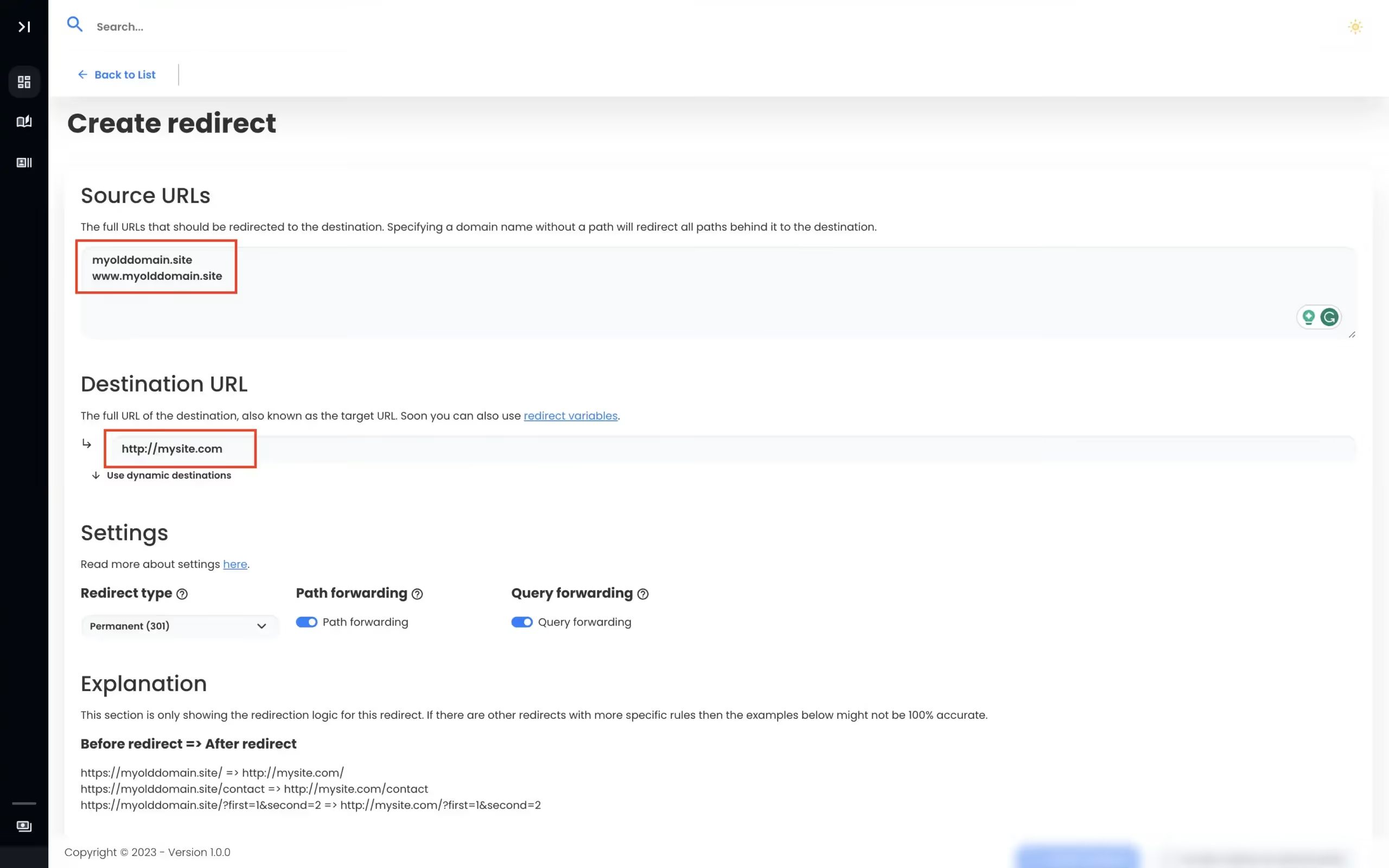
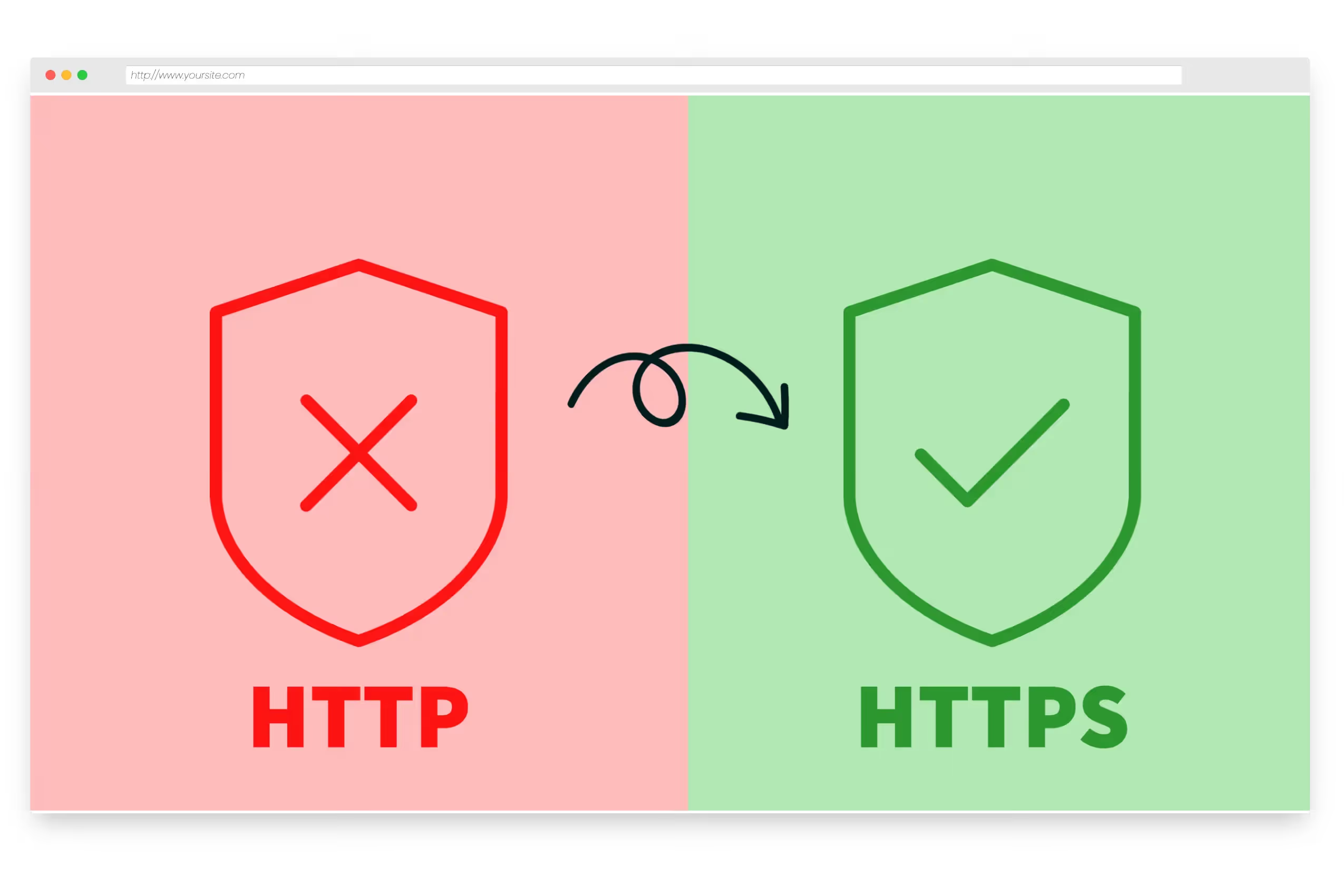
No server to spin up, no nginx.conf to write, no SSL certificates to provision with certbot, no OS to patch, no uptime to monitor. If you need a server solely for domain redirects, that's $5-20/month in VPS costs plus your time managing it. Domain Forward covers 5 domains for free, with analytics and API included. For marketing teams, IT ops, or anyone who isn't comfortable with command-line server configuration, the complexity difference is significant.
The Total Cost of Self-Hosting
The VPS costs $5-20/month, but the real cost is ops time: setting up the server, configuring Nginx, obtaining and renewing SSL certificates, monitoring uptime, applying security patches, and debugging when things break at 2am. Domain Forward handles all of this for you. For simple domain forwarding (rebrand redirects, vanity URLs, defensive registrations), self-hosting Nginx is overkill.
View Domain Forward PricingFrequently
asked questions
Nginx uses the return directive (e.g., return 301 https://new-domain.com$request_uri;) or the rewrite directive (for regex-based URL rewriting) in server blocks within nginx.conf. You configure a server block for each source domain, add SSL certificates, and Nginx handles the redirect at the HTTP level.
Nginx itself is extremely fast — it can handle tens of thousands of redirects per second. But speed depends on your server location, specs, and network. Domain Forward uses a managed edge network with multiple global locations. For most use cases, the latency difference is negligible.
If you already have an Nginx server running (e.g., reverse proxy, load balancer, or web server) and you have ops expertise to maintain it, adding redirect rules is essentially free. If you'd need to spin up a server specifically for redirects, Domain Forward is simpler.
Yes. Set up your forwarding rules in Domain Forward, update DNS records to point to our servers instead of your Nginx server, and redirects are live once DNS propagates. If you have complex regex-based rewrite rules in Nginx, verify that Domain Forward's simpler forwarding model covers your needs.
Redirects Without a Server
No Nginx config. No VPS. 5 domains free. No credit card required.