One Domain. Multiple Destinations. You Set the Rules.
Route visitors to different URLs based on their country, device, path, or subdomain. Dynamic destinations let you build conditional redirect logic — without writing server-side code.
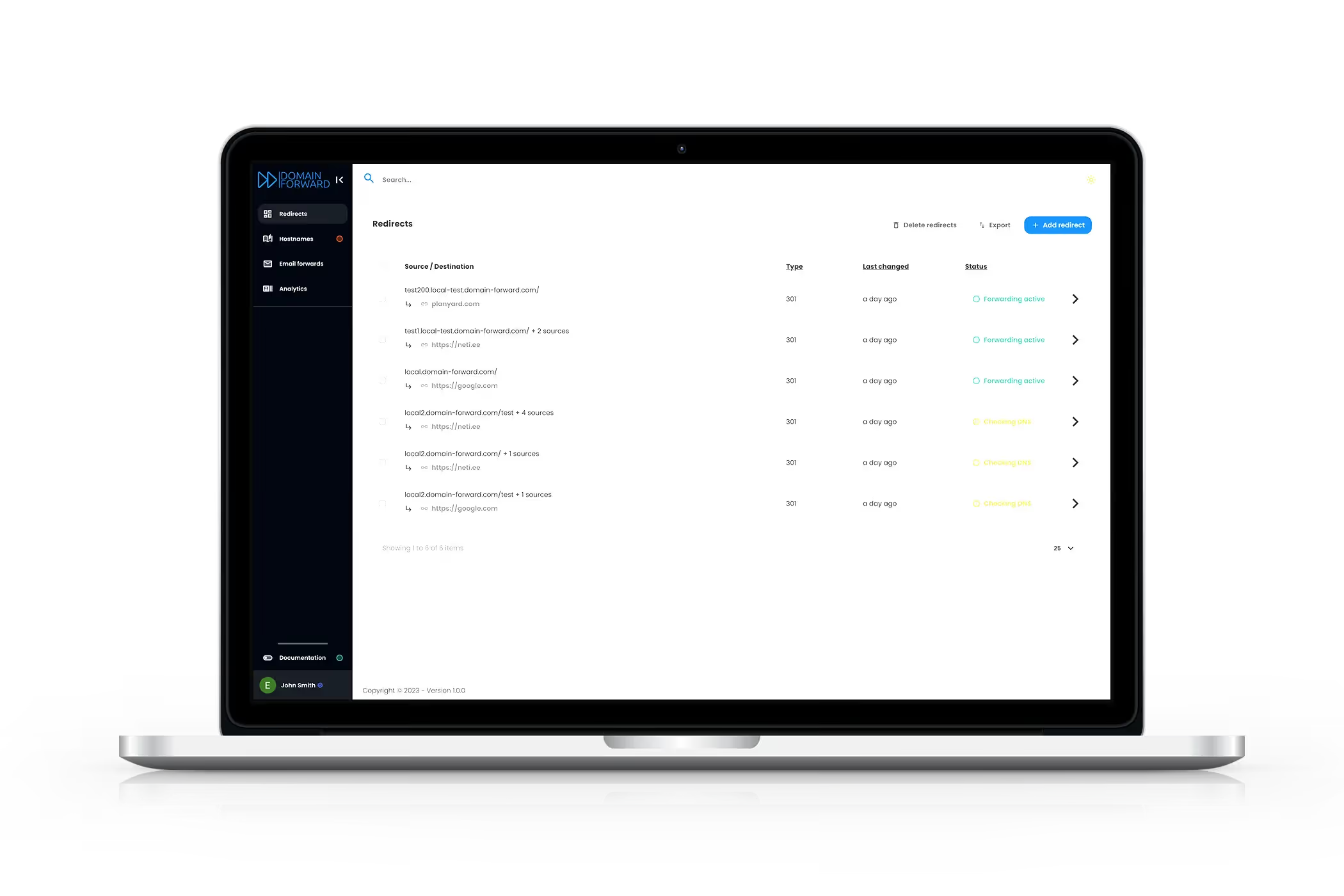
Why Static Redirects Aren't Enough
You're running a global business. US visitors should land on your .com, German visitors on your .de, and mobile users on your app deep link. A standard 301 redirect sends everyone to the same place. Dynamic destinations let you write rules that route traffic intelligently — by country, user agent, path, subdomain, or any combination.
Powered by Expression Rules
Dynamic destinations use JEXL — a simple, human-readable expression language. Write rules like 'if country is US, redirect to example.com/us' or 'if user agent contains Mobile, redirect to m.example.com'. Rules are evaluated in order, with a default fallback destination. No coding background required.
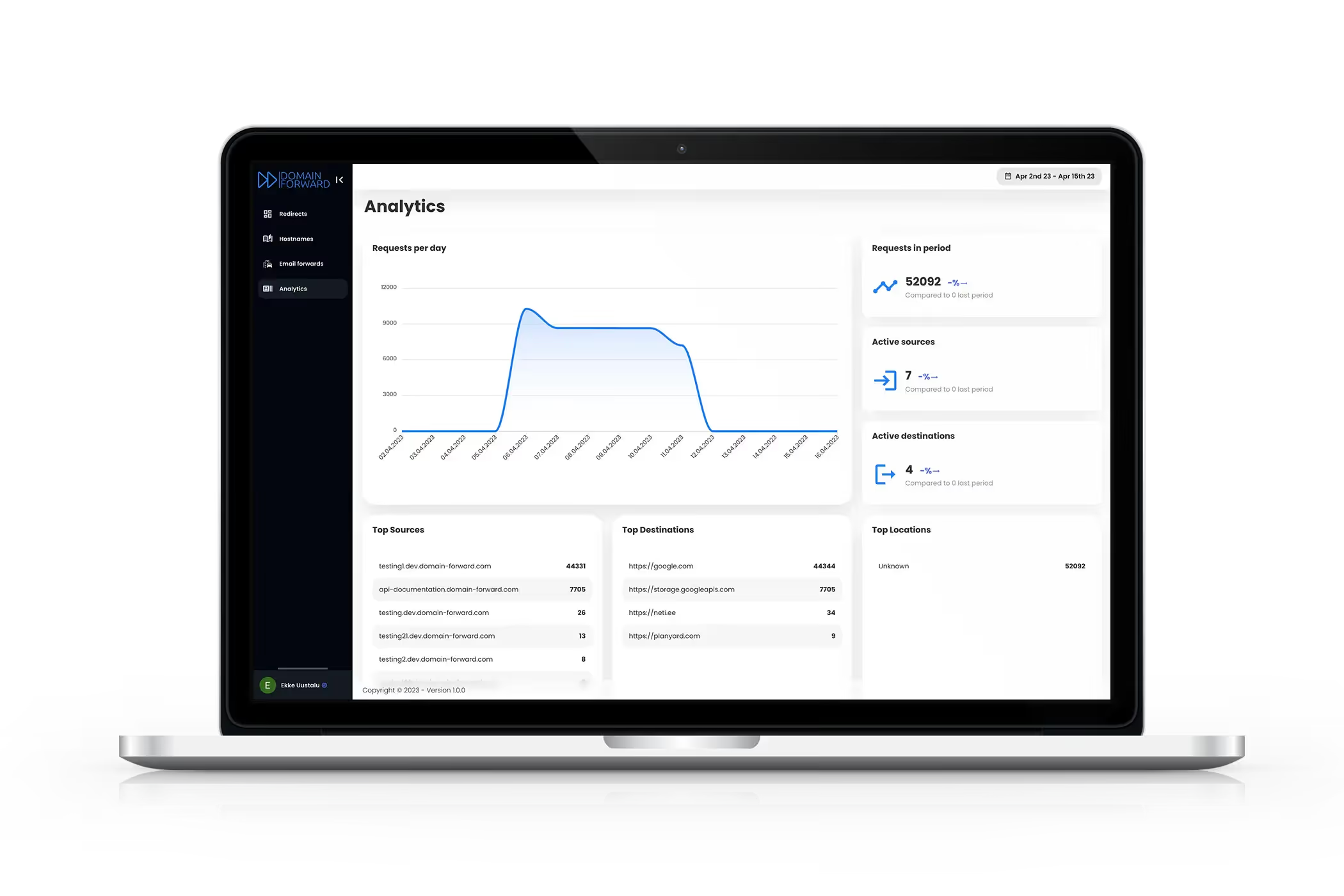
GeoIP Routing Built In
Domain Forward detects visitor countries using MaxMind's GeoLite2 database. Route traffic by country code — send US visitors to your American storefront, EU visitors to your GDPR-compliant site, and everyone else to your global landing page. Country detection happens at the edge with no added latency.
Get Started FreeFrequently
asked questions
You can create rules based on the visitor's country (via GeoIP), user agent, request path, subdomain, HTTP method, and scheme (HTTP vs HTTPS). Rules use JEXL expressions — a simple, readable syntax for conditional logic.
Dynamic destinations are available on the Ultimate plan. Free and Premium plans support standard redirects with path and query forwarding.
Yes. JEXL expressions support AND, OR, and nested conditions. For example, route US visitors on mobile devices to one URL and everyone else to another.
We detect the visitor's country using MaxMind's GeoLite2 database, updated regularly. Country codes follow ISO 3166-1 alpha-2 format (US, GB, DE, etc.).
You set a default destination URL that applies when no dynamic rules match. This ensures every visitor is redirected — no one hits a dead end.
Stop Sending Everyone to the Same Place
Dynamic destinations are available on the Ultimate plan. Start free and upgrade when you're ready.